

We were just so lucky to live these past two years directly across from one of the entrances to St. Cloud Park. The park is one of the most beautiful in the Paris region and contains the terrace on which Château de Saint–Cloud was built (the residence of royal and imperial families from the 16th century). Our entrance was through a short train tunnel you see in the featured photo. I took it this May, knowing I would miss seeing this entrance near our school. There are many statues and fountains in the park that were part of the Palace grounds from the 17th to 19th century over an area of 5 square kilometres!! LOTS of pathway options that were free to explore!


In 1785, it was purchased by Louis XVI who gave it to Marie-Antoinette. Then the Queen’s architect from Versailles, refurbished the château. In 1801, The palace, in its refurbished state, became the official centre of consular and as a result, imperial power.
Saint-Cloud was the scene of many significant Napoleonic events: the proclamation of the empire; the baptism of Louis-Napoleon by Pope Pius VII; the marriage of Napoleon and Marie-Louise in 1810; the celebrations for the baptism of the King of Rome in 1811…
After his proclamation as Emperor, Napoleon III made the château one of the official 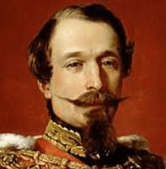 residences of the imperial court and a place of government. Napoleon performed his role as head of state here, holding council and giving grand receptions, ex: for Queen Victoria in 1855; Charles XV of Sweden in 1861, etc.
On the Terrasse de la Lanterne, a site which soars 94 metres above the Paris skyline, Napoleon had built (a copy of the monument to Lysicrates in Athens). This, when lit, signified that the Emperor was in residence. It was destroyed during the war of 1870.
After Napoleon III declared war on the Prussians, the site was occupied by a Prussian force which used the high outcropping to shell Paris. In 1870 the Chateau was blown up by shells fired at it; and it went up in flames. Despite the fact the château could have been restored (as photographic evidence shows) and some of the furniture saved, it was decided to demolish the building, because of it’s ambivalent history.
Today all that remains of this site, which forcefully left its imprint on the history of  France, is the park, and the outbuildings. Outdoor concerts are often held here and we went to 3 of them in our two years there. We could sometimes hear the music coming from different bandstands or see lights shooting into the sky. Chris and I went to watch on outdoor movie there in our last week, and said our goodbyes to the memories we had made, walking or biking in the park weekly. We always loved exploring this significant location in French history. We will never forget the walk over the highway to get there, the magnificent ‘grande cascade’ of water at the entrance to the original chateau, or the view from ‘La Lanterne’.


For more photos of Parc St. Cloud, check out this link. If you visited the park with us when visiting and are interested in it’s history, written according to each century with many interesting links, check out this link.
 C M G B Overseas